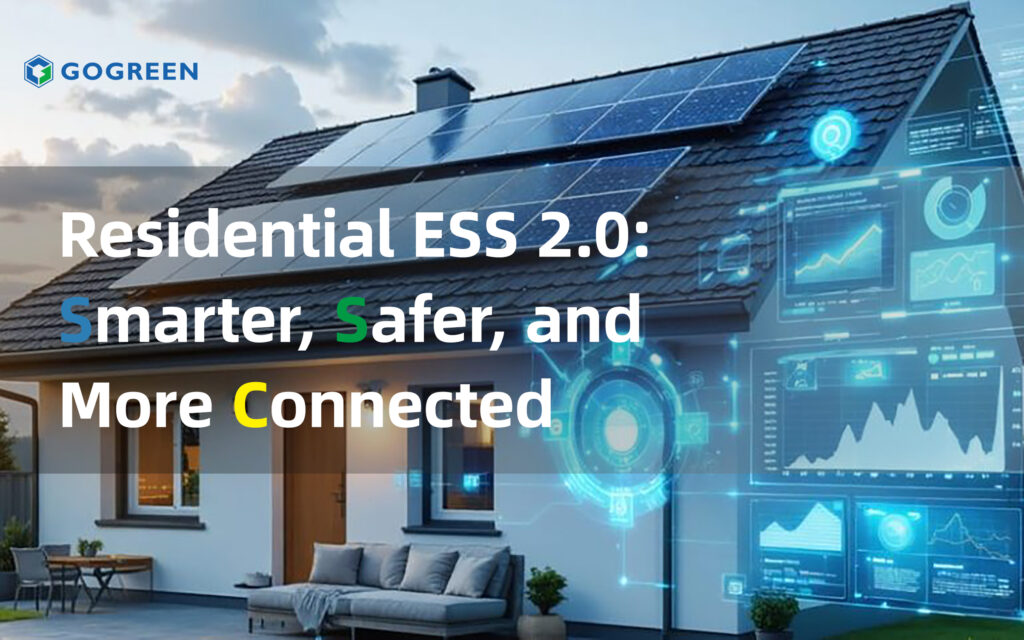
As distributed energy resources (DERs) proliferate and households increasingly adopt rooftop solar, electric vehicles, and smart appliances, residential energy storage systems (ESS) are evolving fast. What was once a backup battery is now transforming into an intelligent, networked, and safety-aware subsystem within the home energy ecosystem. In this new generation—let's call it Residential ESS 2.0—three pillars define the evolution: smart EMS & AI load forecasting, safety and reliability, and connected/cloud architectures.
1. Smart EMS & AI-based Load Prediction
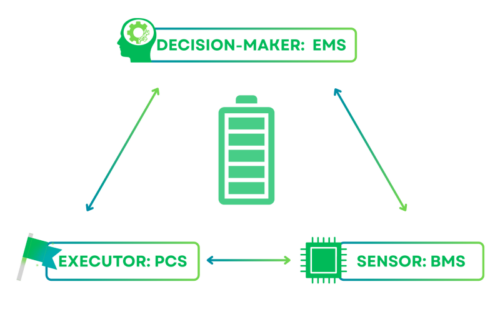
At the heart of ESS 2.0 is a smart Energy Management System (EMS) that orchestrates when and how to charge, discharge, or idle the battery in coordination with household loads, solar generation, and grid signals. An EMS typically consists of data acquisition (metering, sensors), control logic (algorithms), and user interfaces.
But new advances push the EMS beyond rule-based heuristics into forecast-driven, adaptive control. For instance:
Forecasting household load and solar generation: By learning historical consumption and using weather data, EMS can predict near-term load swings and PV output, enabling proactive dispatch decisions. A recent study on AI-enhanced EMS shows that forecasted load patterns can improve dispatch decisions and reduce energy costs.
Model predictive control (MPC) or reinforcement learning: Some systems embed MPC or even RL to decide charging/discharging strategies over a short horizon, adjusting dynamically as forecasts update.
Edge + cloud hybrid decision making: Time-sensitive decisions (e.g. sudden load spike) may be handled locally (edge), while longer-term optimization (day-ahead planning, seasonal patterns) happen in the cloud. Market reports foresee a dominance of hybrid edge–cloud control for storage optimization.
In residential ESS, this translates into smoother battery cycles, better alignment with PV output, lower energy bills, and more efficient use of battery capacity.
2. Safety, Reliability & Battery Health Monitoring
With more intelligence comes more stress and complexity on the hardware. For ESS 2.0, safety and reliability are non-negotiable.
Battery Health Diagnostics & Predictive Maintenance: The EMS often collaborates with the Battery Management System (BMS) to monitor state-of-health (SoH), detect degradation, and flag anomalies. Some cloud platforms support full lifecycle data management and automated diagnostics.
Second safety layer: In many advanced architectures, EMS acts as a supervisory layer above the BMS, enforcing operational constraints (e.g. limiting charge/discharge under extreme temperature or grid faults), adding redundancy and protection.
Fault prediction and anomaly detection: Using AI or statistical methods, systems can flag abnormal behavior (e.g. unexpected current draw, voltage drift) before catastrophic failure. This predictive capability increases system uptime and trust.
Thermal management and cell balancing: Especially as batteries are pushed harder for fast charge / discharge cycles, cooling management and balancing algorithms are critical to prevent hotspots, aging acceleration, or safety events.
EMS CONTROLLER
In sum, ESS 2.0 not only reacts to user commands but also guards itself proactively.
3. Connectivity & Cloud Architectures
To enable continuous learning, remote updates, and aggregation, ESS 2.0 must be deeply connected.
Cloud-based EMS / remote monitoring platforms: Many vendors already deploy cloud platforms to collect data, run analytics, dispatch firmware updates (OTA), and provide dashboards. For instance, the ZOE EMS Cloud Platform supports IoT, big data analytics, battery diagnostics, and algorithmic dispatch across devices.
Aggregation into Virtual Power Plants (VPPs): Residential systems can be aggregated in cloud platforms or service backends to provide grid services (frequency regulation, demand response, energy trading). The EMS facilitates the dispatch of the aggregated fleet.
Digital twins and simulation models: Cloud backends can maintain digital models of each home’s ESS, run simulations or what-if scenarios, and feed back optimal control parameters.
Data security, privacy & edge protection: Because personal houses are involved, architectures must carefully partition sensitive data (e.g. load profiles) and encrypt communications. Some research even proposes privacy-protecting control strategies (e.g. minimizing information leakage) while still achieving efficient dispatch.
OTA updates & remote maintenance: Connectivity enables remote firmware or algorithm updates, bug fixes, new features, or patches without on-site visits.
One example: EcoFlow's newly announced Oasis smart EMS pairs AI and cloud connectivity to manage home energy flows, making dynamic decisions (e.g. switching to backup in outage, charging ahead of storms) and offering a conversational UI.
4. Use Cases & Benefits (for Homeowners)
Putting together smart EMS, safety, and connectivity, Residential ESS 2.0 unlocks multiple benefits:
Quantitatively, smart forecast-driven dispatch can reduce energy costs by several percent compared to rule-based strategies. For example, a smart load coordination strategy in a published study showed ≈ 5 % cost reduction versus a baseline approach.
5. Challenges & Future Outlook
While ESS 2.0 is promising, challenges remain:
Algorithm robustness & generalization: Homes vary widely in consumption patterns, climate, appliance sets. Models trained in one region may not generalize well. Overfitting and adaptation need careful attention.
Capital & development cost: Integrating AI, sensors, connectivity, secure hardware, and cloud services increases upfront cost, which may slow adoption in cost-sensitive markets.
Interoperability & standardization: Different inverters, BMS, home appliances from various vendors must plug into a unified EMS layer. Lack of standardized interfaces can hamper integration.
Cybersecurity & privacy: More connectivity means higher risk. Ensuring secure protocols, encryption, and minimal data exposure is essential.
Regulatory & grid rules: In many markets, rules for residential storage to participate in grid services are still nascent or restrictive.
In spite of these hurdles, the trajectory is clear: homes will gradually evolve into prosumers with intelligent, connected storage systems that not only serve the household, but also support grid stability.
At Shanghai Gogreen Energy, we believe that the future of residential energy storage lies in intelligent integration — where smart EMS, advanced safety management, and cloud connectivity work seamlessly together to empower every home. Our customized residential ESS solutions are designed to adapt to diverse grid conditions and user demands, offering flexibility, reliability, and peace of mind for homeowners worldwide.
//blog
Related Posts
Superatis Tauri montis verticibus qui ad solis ortum sublimius attolluntur, Cilicia spatiis porrigitur late distentis dives bonis omnibus


 Back to All Posts