
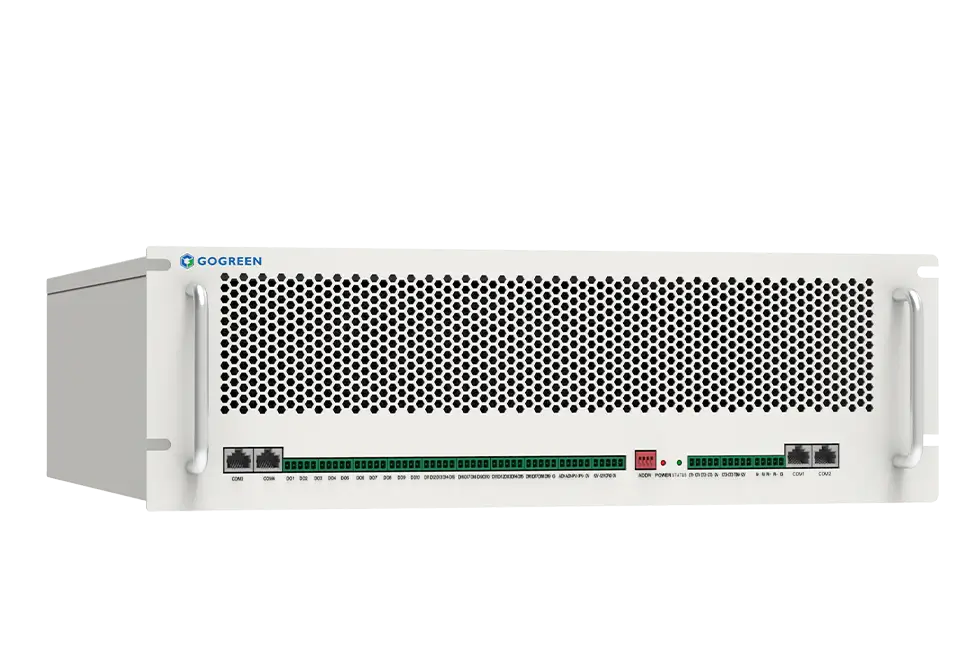
Static Transfer Switch (STS)

Static Transfer Switch (STS)

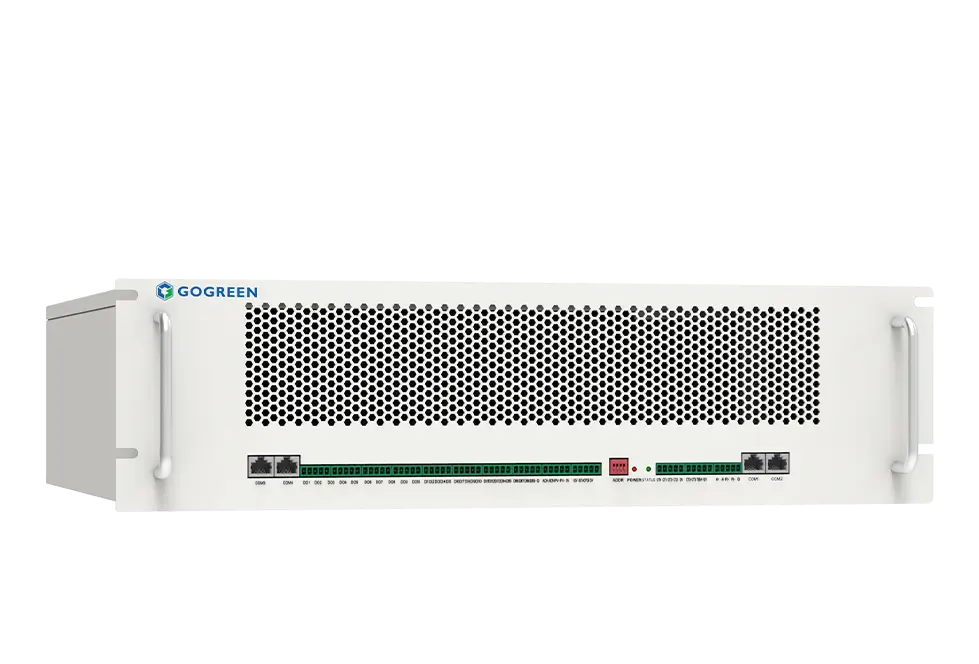
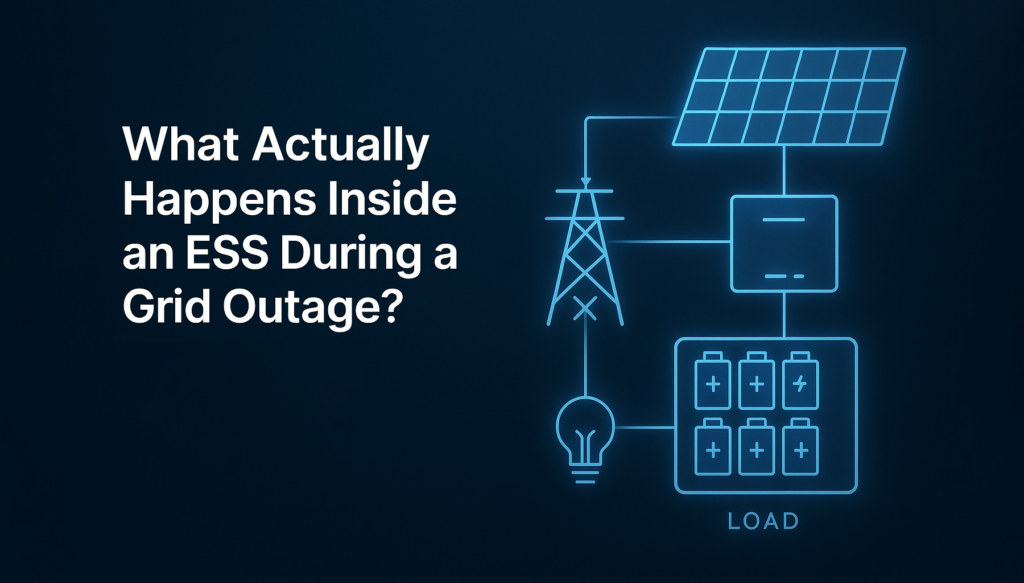
A Static Transfer Switch (STS) is a power switching device based on electronic components. It continuously monitors the grid in real time, and when a fault occurs (such as voltage sag, surge, undervoltage, or outage), the STS isolates the grid, and the PV or battery supplies power independently.

//Highlights

Features

  • High Efficiency
  • Fast Grid Switching
  • Modular Design
  • 01

    High Efficiency

    Maximum efficiency up to 99% with superior power quality.

  • 02

    Fast Grid Switching

    Intelligent grid-to-off-grid switching with transfer time <10ms.

  • 03

    Modular Design

    Standard rack-mounted modular design for flexible configuration, easy maintenance, and seamless expansion.

//TECH spec

Specifications

G-Flex-150STS G-Flex-300STS G-Flex-600STS
Basic
Rated power 150 kW300 kW600 kW
Maximum power 165 kW330 kW660 kW
Rated AC voltage 400Vac, 3W+PE
Rated frequency 50/60Hz(±5Hz)
Rated AC current 216A433A866A
Switching time <10ms
Size1 (W*D*H) 483 (without mounting lug 440)*600*150 mm483 (without mounting lug 440)*600*150 mm566 (without mounting lug 520)*600*150 mm
Size2 (W*D*H) 566 (without mounting lug 520)*600*150 mm
Weight (approx.) 25kg30kg/32kg37kg
Protection level IP20
Operating temperature 25℃ ~ +60℃ (>45℃ derating)
Relative humidity 0~95% (No condensation)
Cooling mode Intelligent air cooling
Noise <70dB
Altitude 3000m (> 3000m derating)
Communication port CAN
//faqs

You Ask
We Answer

Still have questions?
Don't hesitate to contact our experts!

What are the advantages of STS compared to other switching methods?
Compared with Manual Switching: Manual transfer relies on human operation, which is slow and prone to error. It cannot respond to grid faults within milliseconds, while an STS (Static Transfer Switch) performs automatic, precise, and fast switching, ensuring higher reliability. Compared with ATS (Automatic Transfer Switch): An ATS usually takes seconds to tens of seconds to transfer. For sensitive equipment or critical applications, this delay can cause data loss, downtime, or system failures. In contrast, an STS enables millisecond-level transfer, meeting the needs of high-reliability power supply.
What is the role of STS in an energy storage system?
Enhanced Coordination and Scalability: The Static Transfer Switch (STS) works closely with the Power Conversion System (PCS). While the PCS handles energy conversion and control, the STS manages power source switching. Together, they enable the energy storage system to support grid services such as peak shaving and frequency regulation, and to provide stable power supply for loads in off-grid mode. Multi-Source Power Management: Beyond the grid and storage batteries, the STS can also integrate diesel generators, solar PV, and other power sources. Based on preset logic and real-time power conditions, it intelligently selects the optimal source, improving power reliability and flexibility. This makes it ideal for microgrids and multi-source energy scenarios.
//blog

Latest on BESS

View More Blogs
//GET STARTED

Ready to Power Your Business With Smarter Energy Storage?

    Your Information How Can We Help?